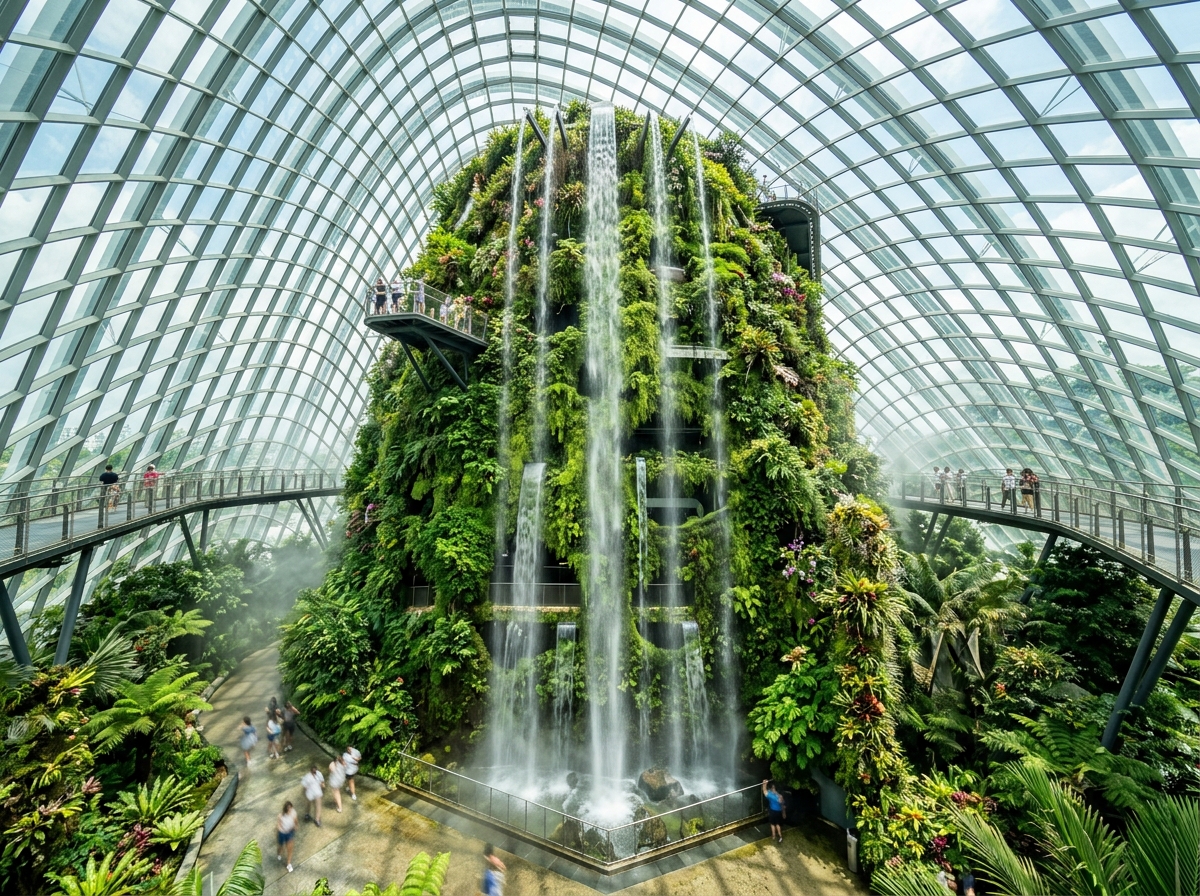
Singapore is a city-state of stunning contrasts, where soaring modern skyscrapers stand side-by-side with lush rainforest foliage and historic cultural districts. For newly retired couples from Chinese-speaking backgrounds, visiting this garden city represents a highly anticipated milestone—an opportunity to experience a clean, safe, and culturally rich international destination. However, beneath the manicured greenery lies a hidden challenge that catches many mature travellers off-guard: the intense equatorial climate.
For visitors accustomed to temperate seasons, the sheer weight of Singapore’s tropical heat can quickly turn a dream holiday into a physically exhausting ordeal. Understanding this climate trap, and knowing how to navigate it, is the first and most crucial step to enjoying your Singapore adventure.
The Equatorial Climate Trap and Acclimatisation Gaps
The primary challenge lies in Singapore’s relentless meteorological profile. Unlike destinations with distinct seasonal changes, Singapore sits just 137 kilometres north of the equator. This geographic positioning guarantees a consistent daily temperature of 31°C to 34°C all year round. While these temperatures are high, they are made significantly more punishing by the relative humidity levels, which consistently hover between 80% and 90%.
To the human body, humidity acts as a thermal blanket. In dry climates, the body cools itself efficiently through sweat evaporation. In Singapore's thick, moisture-laden air, however, sweat cannot evaporate. Instead, it clings to the skin, rendering the body’s natural cooling mechanisms almost entirely ineffective.
This physiological challenge is compounded by the "acclimatisation gap." Medical research indicates that the human cardiovascular system requires roughly 10 to 14 days of gradual exposure to fully adapt to extreme equatorial conditions. Since the typical leisure trip to Singapore lasts less than a week, senior travellers are forced to operate in a constant state of thermal deficit. From the moment you step out of Changi Airport, your body is working in overdrive just to maintain its core temperature, leaving you highly vulnerable to thermal stress, rapid dehydration, and heat exhaustion.
The Hidden Risks of Thermal Shocks and Cardiovascular Strain
If the outdoor heat is a slow drain on your energy, the transition between environments is a sudden shock to the system. Singapore is famously air-conditioned; shopping malls, restaurants, museums, and underground Mass Rapid Transit (MRT) stations are aggressively cooled to temperatures between 18°C and 20°C.
For a senior traveller, walking out of a humid 34°C street directly into an 18°C indoor space represents a massive 16-degree temperature plunge. Moments later, stepping back outside reverses the shock. These rapid, repeated shifts place a severe strain on the cardiovascular system. Blood vessels constrict and dilate rapidly, which can cause sudden spikes in blood pressure, dizziness, joint stiffness, and what locals refer to as the "air-con flu."
Instead of enjoying the rich heritage of Chinatown or Kampong Glam, seniors frequently find themselves battling headaches, sudden fatigue, and a constant feeling of physical heaviness. The sheer exhaustion of trying to regulate body temperature means that by mid-afternoon, many retired travellers are forced to abandon their plans, returning to their hotel rooms defeated and depleted, missing out on the experiences they travelled so far to enjoy.
A Personalised, Slow-Paced Approach to Tropical Travel
Fortunately, you do not have to let the equatorial heat dictate your holiday. The key to conquering Singapore’s climate lies in abandoning the fast-paced, rigid schedules of traditional tour groups and adopting a flexible, personalised travel strategy designed around your physical comfort.
As a dedicated local guide, I design bespoke itineraries that treat the climate as a partner rather than an obstacle. Our day begins during the cooler, gentler hours of the early morning, allowing you to stroll through heritage districts before the afternoon sun reaches its peak. During the hottest hours of the day (typically between 11:30 AM and 3:30 PM), we transition to curated indoor activities—such as visiting world-class air-conditioned galleries or enjoying a long, relaxed lunch in a comfortable heritage restaurant.
Crucially, we completely bypass the exhausting reliance on public transit and long walks under the sun. We travel in private, pre-cooled vehicles, ensuring that you transition smoothly between sights without thermal shock. I also manage your pacing, ensuring we stop at local tea houses and shaded resting spots to enjoy hydrating local beverages. By taking care of the logistics and matching the day's pace to your personal comfort, we ensure that you experience the authentic soul of Singapore safely, comfortably, and entirely at your own pace.
新加坡是一个充满强烈对比的城市,高耸的现代摩天大楼与茂密的雨林植物、历史悠久的文化街区并存。对于来自中文背景的新退休夫妇来说,访问这个花园城市是一个备受期待的里程碑——这是一次体验干净、安全且文化丰富的国际目的地的绝佳机会。然而,在精心修剪的绿植之下,隐藏着一个常常让成熟旅行者措手不及的挑战:炎热的赤道气候。
对于习惯了温带四季变化的游客来说,新加坡热带高温的沉重压力可能会迅速将梦想中的假期变成一场身体上的严峻考验。了解这个气候陷阱,并学会如何应对,是享受新加坡冒险之旅的第一步,也是最关键的一步。
赤道气候陷阱与身体适应期差距
最主要的挑战源于新加坡无常的赤道气候特征。与拥有明显季节变化的旅游目的地不同,新加坡距离赤道仅137公里。这一地理位置确保了全年平均31°C至34°C的恒定高温。虽然温度已经很高,但由于空气相对湿度常年保持在80%至90%之间,这种闷热感变得更加难以忍受。
对人体而言,高湿度就像一床保温被。在干燥的气候中,身体可以通过汗水蒸发来高效降温。然而,在新加坡潮湿、充满水分的空气中,汗水无法蒸发,而是粘附在皮肤上,使人体自身的天然降温机制几乎完全失效。
这种生理上的挑战还因“身体适应期差距”而进一步加剧。医学研究表明,人类的心血管系统需要大约10到14天逐渐适应极端的赤道环境。由于典型的新加坡休闲旅行通常持续不到一周,老年旅行者实际上被迫在身体不断累积热负荷的状态下活动。从您走出樟宜机场那一刻起,您的身体就在超负荷运转,仅仅是为了维持核心体温,这使您非常容易受到热应激、快速脱水和中暑的威胁。
温差冲击与心血管负担的隐形风险
如果说室外的高温在慢慢消耗您的体力,那么室内外的环境转换则会对身体造成突如其来的冲击。新加坡以其冷气充足而闻名:购物中心、餐馆、博物馆和地铁站都常年被强力降温至18°C到20°C之间。
对于老年旅行者来说,从潮湿的34°C室外街道直接走进18°C的室内空间,意味着身体要承受高达16度的瞬间温差。几分钟后,当重新走到室外时,这种冲击再次反转。这种频繁且剧烈的交替对心血管系统造成了严重的负担。血管急剧收缩和扩张,可能会导致血压突然飙升、头晕、关节僵硬,以及当地人所说的“冷气感冒”。
许多退休旅行者不仅无法尽情享受牛车水或甘榜格南的丰富文化遗存,反而饱受头痛、突然疲劳和身体沉重感的折磨。由于耗费了太多精力来调节体温,到了下午三四点钟,很多老年游客不得不放弃原定计划,疲惫不堪地返回酒店客房休息,白白错过了他们长途跋涉前来体验的旅程。
量身定制的慢节奏热带旅行方案
幸运的是,您完全不必让赤道的高温来主导您的假期。征服新加坡气候的关键在于放弃传统旅行团那种节奏紧凑、死板的行程,采用一种以您的身体舒适度为核心的、灵活的量身定制旅行策略。
作为您专属的当地向导,我会设计将气候视为合作伙伴而非障碍的定制行程。我们的一天会从清晨凉爽温和的时刻开始,让您在午后骄阳肆虐前悠闲地漫步在历史街区。在一天中最热的时段(通常是上午11:30至下午3:30),我们会转向精心挑选的室内活动——例如参观世界顶级的空调画廊,或者在舒适的老字号餐厅享受漫长而放松的午餐。
最关键的是,我们完全避开了搭乘公共交通和烈日下长时间行走的劳顿。我们全程乘坐提前开好冷气的私人专车,确保您在不同景点之间平稳过渡,不受温差冲击的影响。我还会帮您规划步行节奏,确保我们随时在当地의茶室和遮阳的休息点停下,享用清凉补水的本地饮品。通过妥善打理所有后勤细节,并将一天的节奏与您的身体状况完美契合,我们保证您能以最安全、最舒适的方式,按照自己的步调,真正走进新加坡的灵魂深处。