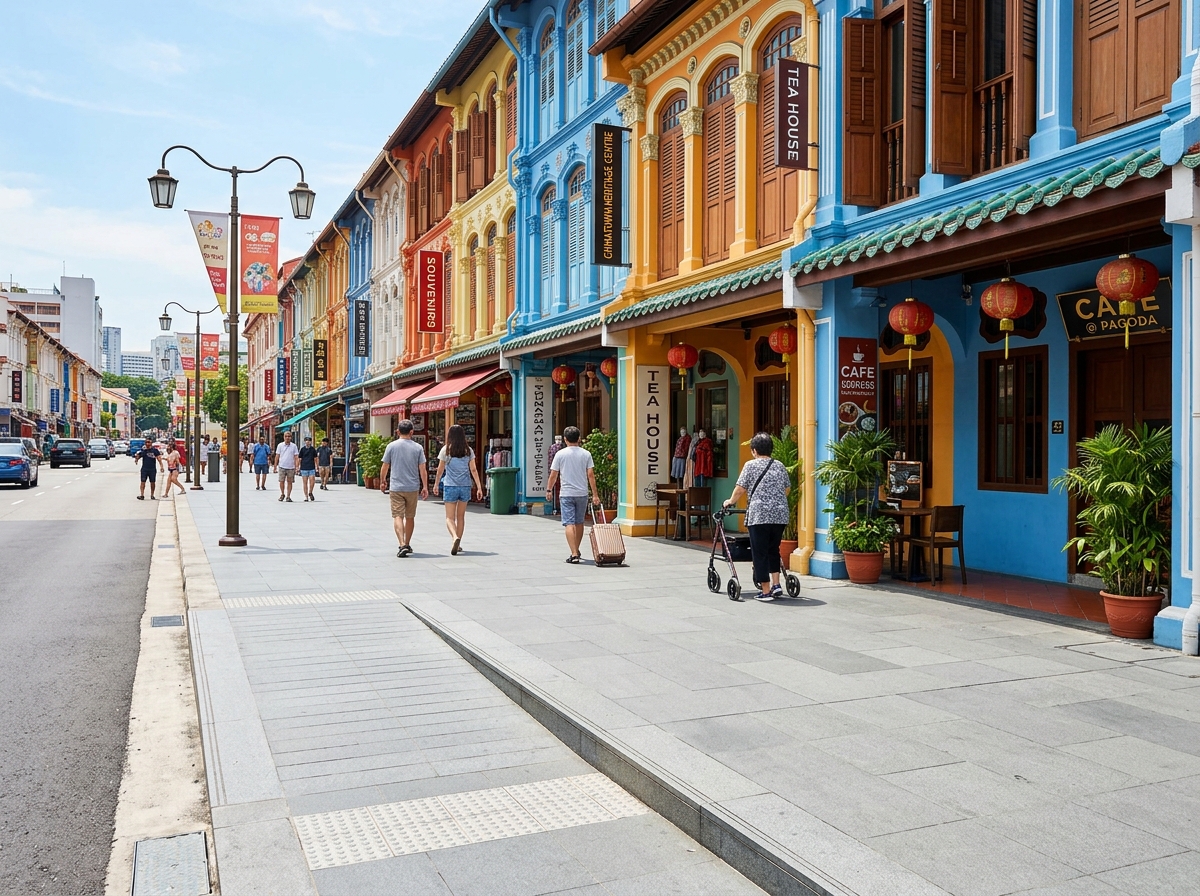
For newly retired couples visiting Singapore, the city's historic enclaves—Chinatown, Kampong Glam, and Katong/Joo Chiat—are the crown jewels of the travel experience. These districts offer a vivid window into Singapore’s multicultural past, featuring beautifully restored shophouses, traditional trades, and aromatic food stalls. However, behind the picturesque pastel facades lies a significant challenge for mature travellers: the architectural and physical barriers of conservation zones built long before modern accessibility standards were established.
To enjoy the rich heritage of Singapore without physical strain or safety concerns, it is essential to understand the unique structural landscape of these historic zones and how to navigate them with ease.
Structural Obstacles in Restored Heritage Zones
The primary challenge stems from the architectural heritage itself. Singapore’s conserved shophouses, built primarily in the 19th and early 20th centuries, were constructed without accessibility in mind. The pathways fronting these shophouses, known as "five-foot ways," are characterised by uneven granite slabs, step thresholds between properties, and narrow corridors. In districts like Chinatown, the pavements can be highly irregular, with sudden single-step drops or steep curb transitions.
Furthermore, these historic walkways are frequently shared spaces. Commercial displays, souvenir racks, outdoor dining tables, and parked goods can block these paths, forcing pedestrians to step down onto the road to bypass obstructions. In busy enclaves like Kampong Glam or Joo Chiat, where roads are narrow and traffic can be heavy, this is particularly problematic for seniors.
The interior of these conserved shophouses presents an even greater obstacle. Due to strict conservation guidelines, structural modifications such as retrofitting elevators or lifts are heavily restricted or physically impossible. As a result, accessing second-floor galleries, traditional boutiques, or dining rooms requires climbing steep, narrow, and often creaky wooden staircases that lack proper handrails or modern safety features. For senior travellers with joint sensitivity or limited mobility, these stairs present an immediate physical barrier.
The Threat of Fall Hazards and Social Exclusion
The impact of these architectural barriers is both physical and emotional. Navigating uneven surfaces and stepping on and off high thresholds places significant stress on seniors' knees and ankles. The risk of tripping or slipping on uneven granite is a constant worry, which drains the relaxation from a leisurely stroll.
When walkways are blocked, forcing seniors to walk alongside moving traffic on narrow heritage streets, travel becomes stressful rather than enjoyable. The physical exertion required to navigate these obstacles causes premature fatigue, leading to muscle soreness and a general feeling of vulnerability.
Inside heritage venues, the lack of elevator retrofits can lead to sudden disappointment. A highly recommended traditional restaurant or a beautiful cultural exhibit located on the second floor of a shophouse can become entirely inaccessible. Senior travellers are forced to make a difficult choice: endure painful knee strain and risk a fall on steep, dark wooden stairs, or wait downstairs while others enjoy the experience.
This exclusion is discouraging, causing feelings of burden or isolation. A day that was meant to be filled with cultural discovery can end in frustration, with seniors feeling that the historic heart of Singapore is closed off to them.
A Curated, Level-Access Journey Through History
Fortunately, Singapore's rich history can be experienced comfortably and safely without climbing steep stairs or navigating blocked walkways. The key lies in careful, professional route planning and selecting venues that combine heritage charm with modern accessibility.
As your local guide, I curate heritage walks specifically designed to avoid these architectural obstacles. We focus on wide, flat, and paved pedestrian precincts that allow you to admire the historic shophouses from a comfortable distance. I select ground-floor-only heritage sites and boutiques, ensuring that you can explore the culture without encountering stairs.
When we dine in historic areas, I choose restaurants that have successfully integrated modern accessibility features, such as ramps and lifts, or those located in modern developments adjacent to heritage zones. This allows you to enjoy traditional culinary classics in complete comfort. Throughout our tour, we walk at a relaxed pace, with planned stops at accessible cafes and shaded resting spots. By managing the route and eliminating physical barriers, we ensure that Singapore’s history remains open, welcoming, and entirely accessible to you.
对于访问新加坡的新退休夫妇来说,牛车水(Chinatown)、甘榜格南(Kampong Glam)以及加东/如切(Katong/Joo Chiat)等历史悠久的文化街区,是整个旅行体验中最耀眼的明珠。这些地区提供了一扇生动的窗口,让人们得以一窥新加坡多元文化的过去,展示了精美修复的店屋、传统的行业和香气四溢的熟食摊位。然而,在这些如画般柔和的店屋立面背后,对成熟的旅行者而言却潜藏着一个巨大的挑战:在远早于现代无障碍标准建立之前所建造的保护区内,存在着许多建筑和物理上的重重障碍。
要想在不产生身体劳顿或安全顾虑的情况下尽情享受新加坡丰富的文化遗产,了解这些历史街区独特的建筑格局并学会如何轻松应对,是至关重要的。
历史保护区内的结构性障碍
最主要的挑战根源于这些建筑遗产本身的结构限制。新加坡受到保护的联排店屋主要建于19世纪和20世纪初,在建造时完全没有考虑无障碍通行的问题。这些店屋门前被称为“五脚基”的骑楼通道,其特点是地面由不平整的花岗岩板铺就、相邻商铺之间存在高度差门槛,且通道狭窄。在牛车水等街区,路面状况往往高度不规则,经常出现突兀的单级台阶高差或陡峭的马路沿过渡。
此外,这些历史悠久的步行通道通常是多用途的共享空间。商家的商品陈列、纪念品货架、户外餐饮桌椅以及停放的装卸货物常常将狭窄的通道堵得水泄不通,迫使行人不得不走到机动车道上绕过障碍物。在甘榜格南或如切等繁忙的文化区,道路本身就十分狭窄且车流量很大,这对老年人来说尤为危险。
这些受到保护的店屋内部甚至存在着更大的物理障碍。由于受到严格的历史建筑保护指南约束,对其进行结构性改造(例如加装电梯或升降机)受到了极大的限制,甚至在物理空间上完全无法实现。因此,如果想要前往二楼的文化展厅、传统精品店或餐饮包间,游客必须攀爬陡峭、狭窄且通常会嘎吱作响的木质楼梯,而这些楼梯往往缺乏合格的安全扶手或现代化的防滑设计。对于有关节劳损或行动不便的老年旅行者来说,这些楼梯构成了难以逾越的障碍。
跌倒隐患与被旅行活动边缘化的风险
这些建筑障碍带来的影响绝不仅仅局限于出行不便,它们还带来了真实的身体受伤风险和沉重的心理压力。在凹凸不平的地面上行进、频繁地上跨或下跨较高的门槛,会给老年人的膝关节和踝关节施加巨大的压力。在不平整的花岗岩路面上绊倒或滑倒的隐患如影随形,这极大消磨了原本轻松愉悦的散步体验。
当骑楼通道被占用,迫使长者在狭窄电历史街区马路上与川流不息的车辆擦身而过时,旅行便失去了原有的闲适,取而代之的是高度的紧张。为了避开这些重重障碍所付出的额外体力,会导致身体过早产生疲劳,引发肌肉酸痛和强烈的不安全感。
在历史遗存场所内部,缺乏电梯设施也常常导致令人沮丧的遗憾。一家备受推崇的二楼老字号餐厅,或是一个设在店屋二层的精美文化展览,都可能因为几道陡峭的阶梯而变得彻底无法进入。老年旅行者往往被迫面临极其为难的选择:要么强忍膝盖剧痛、冒着在陡峭阴暗的木楼梯上摔倒的风险硬撑着爬上去;要么独自在楼下枯等,而让同行的家人或朋友去享受体验。
这种被排除在活动之外的经历非常容易挫伤长者的尊严,让他们产生“拖累他人”的负担感和孤独感。一天原本应该充满文化探索乐趣的旅程,最终却可能在挫败感中收场,让长者感到新加坡这片最核心的历史区域对他们闭起了大门。
精心规划的无障碍历史之旅
幸运的是,在不攀爬陡峭楼梯、不穿行受阻马路的前提下,您依然能够以非常舒适和安全的方式深度体验新加坡的深厚历史。其中的诀窍在于专业的路线规划,并甄选那些将传统历史魅力与现代无障碍设施完美融合的场所。
作为您的本地向导,我专门为您策划避开这些建筑障碍的文化之旅。我们专注于行走在宽阔、平坦、且铺装良好的步行街区内,让您在最舒适的距离和视野内欣赏历史店屋的建筑美感。我为您筛选了只在地面一层展出的文化历史遗存和特色店铺,确保您在游览时完全不需要面对任何台阶。
在历史街区用餐时,我会挑选那些已经成功配置了现代无障碍设施(如通道坡道或垂直电梯)的餐厅,或者选择位于紧邻历史保护区的现代高档商业综合体内的餐厅。这能让您在绝对舒适安逸的环境中享用正宗的传统经典美食。在整个探索旅程中,我们以极其闲适的节奏慢行,并穿插安排在无障碍茶馆和遮阳休息区小憩。通过我们对行进路线的精细控制和对物理障碍的规避,我们确保新加坡的历史文化是一扇对您完全敞开、且体验极其尊贵和舒适的大门。