Singapore is often promoted as an easy, highly accessible destination for Chinese-speaking travellers because of its large ethnic Chinese population and the widespread use of Mandarin. However, for newly retired couples visiting the city-state, the reality can feel quite different. While Mandarin is widely spoken, English remains Singapore's working language, dominating official signage, public transport maps, restaurant menus, and museum exhibitions.
For mature Chinese-speaking travellers, this linguistic landscape can create an unexpected barrier, turning what should be an exciting exploration into an anxious, isolating experience.
The Deceptive Reality of Daily Navigation in a Foreign Language
The primary challenge lies in the foreign language anxiety experienced by many travellers over fifty. Unlike younger generations who grew up in a globalised China with mandatory English education from a young age, many seniors received limited foreign language training during their schooling in the 1970s and 1980s, when educational curricula were different and Russian was often the primary foreign language taught. As a result, navigating the daily details of an international trip can be incredibly daunting.
In Singapore, this challenge is felt immediately. While MRT announcements are made in multiple languages, the detailed ticketing terminals and station maps are primarily in English. In restaurants, menus are often written in English, with local names for dishes transliterated in ways that are unfamiliar to overseas visitors. A menu listing "char kway teow" or "bak kut teh" without Chinese characters or descriptions can be baffling.
Museums and cultural attractions, while rich in history, present most of their detailed historical context and descriptions in English. This linguistic barrier makes basic daily tasks—like ordering a meal, checking directions, or understanding a historical display—feel like a test of translation.
The Psychological Toll of Dependence and Linguistic Isolation
The consequences of this language barrier are not just logistical; they are psychological. When seniors cannot read menus or signage, they lose their autonomy. They are forced to rely entirely on tour group leaders or their adult children to translate and make choices for them. This constant dependence can chip away at their self-confidence, making them feel like passive observers rather than active participants in their holiday.
This dynamic often breeds a sense of isolation. When surrounded by English conversations and signs, senior travellers may withdraw, hesitating to ask questions or explore shops and hawker stalls on their own. The fear of misunderstanding or being misunderstood can make even simple interactions feel risky.
Instead of enjoying the warmth and hospitality of Singapore, seniors may experience constant stress, worrying about getting lost, ordering the wrong food, or holding up a queue. The vacation becomes a source of tension, leaving them feeling disconnected from the destination and eager to return to the comfort of home.
A Friendly, Mandarin-Speaking Guide as Your Local Friend
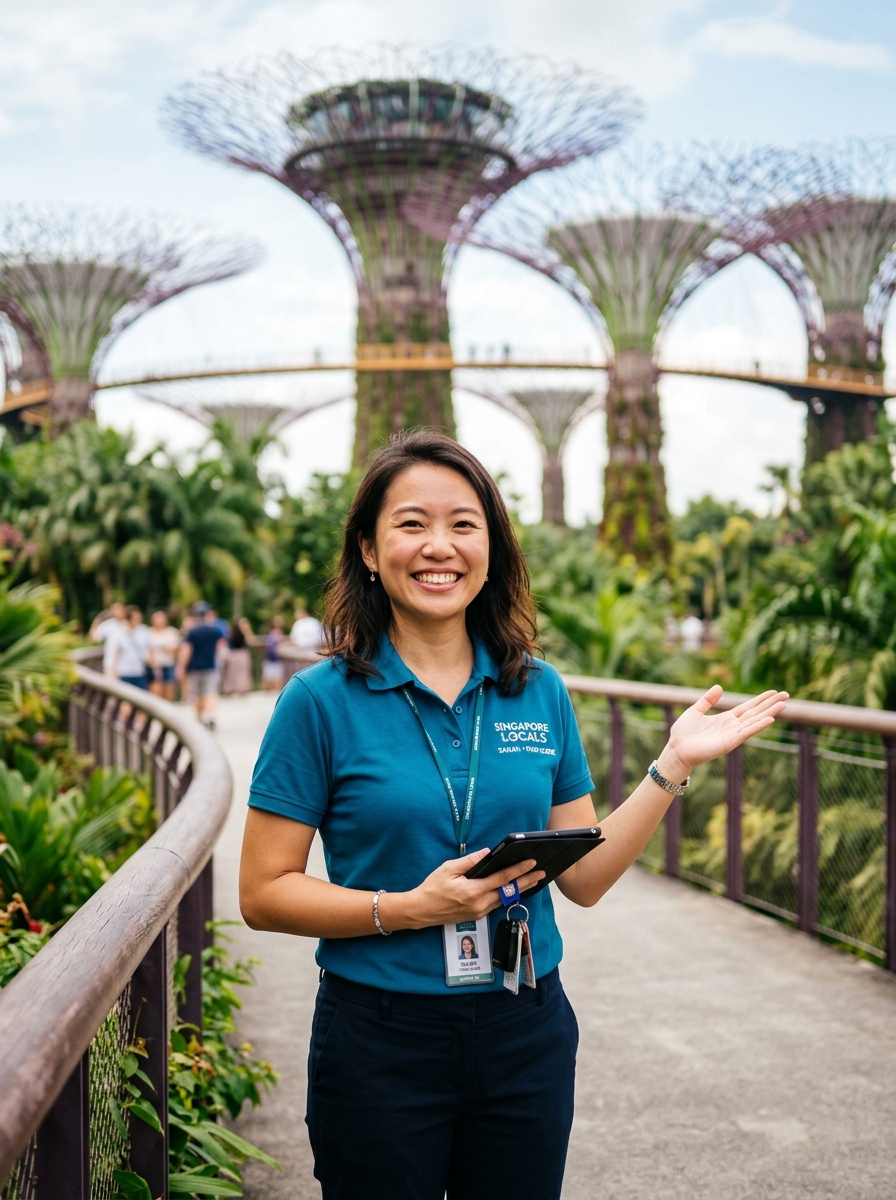
A truly memorable holiday requires a bridge across this language gap, transforming Singapore from a foreign puzzle into a warm, welcoming home. This is where the value of a friendly, bilingual local guide becomes clear.
As your personal guide, I ensure that language is never a barrier to your enjoyment. I handle all transactions, orders, and interactions on your behalf, allowing you to relax and focus on the experience. When we visit restaurants, I translate the menus and explain the local culinary heritage in Mandarin, ensuring you order exactly what you like. At historical sites and museums, I bring the stories of Singapore to life in your native language, providing rich context that standard plaques omit.
Beyond translation, I act as your local friend, helping you interact directly with Singaporean culture. I introduce you to local shopkeepers and hawker vendors, helping you converse and connect without hesitation. We also provide clear, Chinese-language maps and digital resources for your peace of mind. By removing the language barrier, we restore your independence and confidence, allowing you to discover the authentic Singapore with ease and joy.
新加坡常常被宣称为中文母语旅行者最轻松、最无障碍的出国目的地,因为这里有庞大的华族人口且普通话(华语)被广泛使用。然而,对于访问这个城市国家的新退休夫妇来说,实际的体验可能大相径庭。虽然普通话在民间被广泛使用,但英语仍然是新加坡的核心官方与工作语言,主导着所有的官方标识、公共交通地图、餐厅菜单以及博物馆的展览介绍。
对于成熟的中文旅行者来说,这种以英文为主的语言环境可能会构成意想不到的阻碍,将原本令人兴奋的探索之旅变成充满焦虑和孤立感的体验。
外语环境下日常出行的尴尬现实
最首要的挑战在于50岁以上旅行者所面临的外语沟通焦虑。与成长于全球化时代、从小接受系统化英语教育的年轻一代不同,许多长者在20世纪70年代和80年代上学时接受的外语教育非常有限,当时很多学校的主修外语甚至是俄语而非英语。因此,在国际旅行中处理日常生活的细节可能会让他们感到极其吃力。
在新加坡,这种挑战几乎如影随形。尽管地铁(MRT)的广播会使用多种语言播放,但详细的自动售票机操作界面和车站出口地图主要还是英文。在餐厅里,菜单往往是纯英文的,即使是一些本地传统菜肴,也经常被音译成让海外游客摸不着头脑的拼写,如“char kway teow”(炒粿条)或“bak kut teh”(肉骨茶),在没有中文汉字对照的情况下,老人家很难点对想吃的食物。
此外,各处的历史展厅和文化景点虽然底蕴深厚,但其详细的历史背景介绍、解说牌也多以英文呈现。这种语言上的阻碍让诸如点餐、查路或理解一幅画作的背景等最基本的日常活动,都变成了一场令人精疲力竭的翻译测试。
依赖他人与语言隔阂带来的心理负担
语言障碍带来的后果远不止是行程上的不便,更深远的影响在于心理层面。当长者看不懂菜单或指示牌时,他们便失去了出行的自主权。他们被迫完全依赖旅行团领队或者同行的子女来帮他们做所有的翻译和决定。这种长期的依附感会悄然侵蚀他们的自信心,让他们感觉自己只是这场假期里被动跟随的旁观者,而不是充满探索热情的参与者。
这种处境极易引发一种心理上的孤立感。身处周围全是英文对话和英文标识的环境中,老年旅行者往往会变得退缩,不敢主动走进小店或熟食摊位去沟通。由于害怕沟通不畅或造成误解,他们连最简单的日常接触都会感到有些抗拒。
他们无法放松地享受新加坡人特有的热情与好客,反而承受着持续的压力,时刻担心自己会迷路、点错菜或者在排队时动作太慢而耽误别人。本该轻松的度假变成了一种内耗,让他们感到与周围的环境格格不入,甚至早早产生疲惫感而渴望早点回家。
Mandarin导游如本地好友般贴心相伴
一个真正完美的假期需要有一座能够跨越语言鸿沟的桥梁,将一个陌生而复杂的异国城市,转化为一处充满温暖和亲切感的旅行目的地。这这正是双语本地私人导游的独特价值所在。
作为您的专属向导,我将确保语言问题不会给您的旅途带来一丝干扰。我将为您处理好一切日常沟通、点餐和消费支付等琐事,让您可以彻底放松地去沉浸在旅行中。当步入餐厅,我会用清晰的母语为您详解每道本地特色佳肴,帮您点选最合您口味的菜肴。在各大历史古迹和展厅内,我将用生动的母语为您讲透新加坡的历史故事,补充那些标准展板上未曾包含的丰富细节。
除了翻译之外,我更像是您在当地的挚友,帮助您与当地的南洋文化深度连结。我会带您去结识本地的老店主和熟食摊贩,让您在完全没有隔阂的情况下与他们轻松交流。我们还会为您备妥清晰的中文地图及移动端数字助手,给您最坚实的保障。通过帮您彻底消除语言隔阂,我们为您重新找回自主出行的自信与快乐,让您轻松自在地走入最真实、最亲切的新加坡。