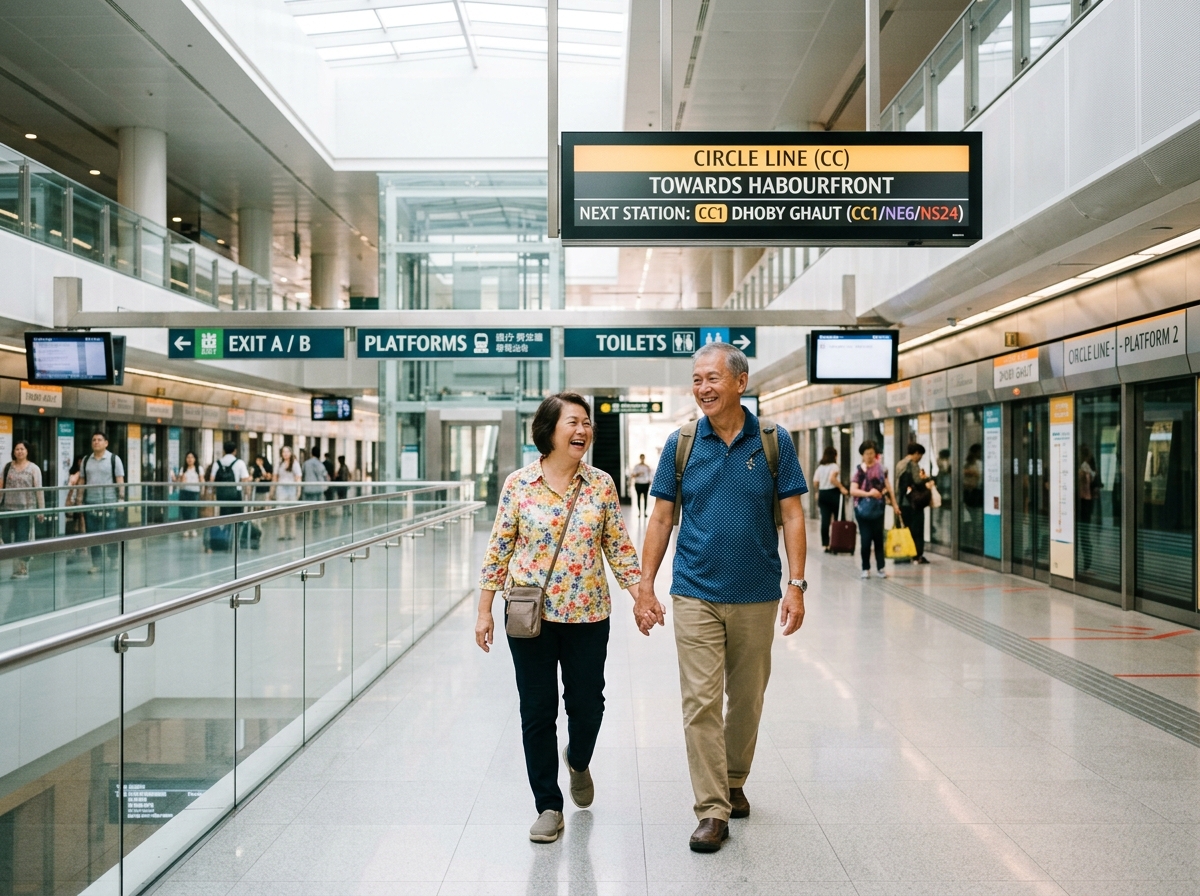
Singapore’s Mass Rapid Transit (MRT) system is celebrated globally as a marvel of modern urban engineering. It is clean, punctual, highly efficient, and serves as the primary artery connecting the city’s various districts. For newly retired couples visiting Singapore, the prospect of using this world-class public transport network is often highly appealing. However, behind the glossy maps and smooth rides lies a physical reality that can quickly lead to exhaustion: the phenomenon of "hidden walking."
For senior travellers, transit fatigue is one of the most common and least anticipated disrupters of a holiday. What looks like a simple train ride on a map can easily translate into thousands of daily steps before ever setting foot in a museum, garden, or restaurant.
The Deceptive Distances of Public Transit
The primary source of physical strain is the scale of Singapore’s modern transit hubs. Many of the most popular tourist interchanges—such as Dhoby Ghaut, Outram Park, or Marina Bay—are massive multi-level underground complexes. Getting from one train line to another, or walking from the platform to the correct street-level exit, frequently involves traversing long, air-conditioned pedestrian linkways, ascending multiple escalators, and climbing hundreds of "hidden" steps.
Because these stations are designed to handle high volumes of foot traffic, the physical walking distances between platforms are deceptively long. For a mature traveller, walking 500 metres just to change lines or exit a station is not uncommon. This hidden physical exertion drains energy reserves early in the day, leaving seniors fatigued before they have even begun exploring their actual destination.
This physical strain is compounded by transit-related anxiety. Singapore is a fast-paced city, and during peak morning and evening transit hours, stations are flooded with hurried commuters. Navigating these bustling, high-density environments is mentally exhausting. Senior travellers often feel intense pressure to keep pace with the crowd, worrying that they will block pathways or hold up other passengers when boarding trains or escalators. This constant state of alertness and anxiety turns public transport into a stressful experience rather than a convenient way to travel.
The Hidden Cost of Physical Overexertion
The consequences of hidden transit fatigue extend far beyond simple tiredness. When senior travellers push through physical exhaustion to keep up with an itinerary, it takes a toll on their health and enjoyment. Muscle soreness, joint pain, and swollen ankles are common side effects of walking on the hard concrete and tiled surfaces of transit stations.
As physical fatigue sets in, the body’s balance and coordination are compromised, increasing the risk of missteps on escalators or stairs. Mentally, the exhaustion dims the joy of discovery. A beautiful temple visit or a scenic view of the Marina Bay skyline becomes secondary to the overwhelming desire to sit down and rest.
Instead of reflecting on the rich cultural heritage of Singapore, couples find themselves counting the steps back to the station, feeling defeated by the sheer effort required to get around. The holiday begins to feel like a test of physical endurance, leading many seniors to shorten their outings or choose to remain in the safety of their hotel rooms, missing out on the unique experiences Singapore has to offer.
A Seamless, Ground-Level Travel Experience
To truly enjoy Singapore, mature travellers need a transport strategy that eliminates hidden walking and protects their energy for the destinations themselves. This is where a custom, high-comfort guided tour makes all the difference.
By partnering with a friendly local guide, your travel logistics are completely re-imagined. We replace the exhausting stairs, crowded platforms, and long walks of the MRT with door-to-door, private air-conditioned transport. You are picked up directly from your hotel lobby and dropped off at the closest possible entrance to each attraction. There are no underground corridors to navigate, no escalators to climb, and no peak-hour crowds to face.
When walking is required, I select routes that are flat, shaded, and rich in resting points. We travel at a relaxed pace, with zero rush, allowing you to take in the sights without the pressure of keeping up with a crowd. If you feel tired, our schedule adjusts dynamically—we can stop for a traditional coffee or simply rest in a comfortable spot while I manage the details. By taking care of the logistics and eliminating the physical strain of transit, we ensure your energy is spent creating beautiful memories, not climbing stairs.
新加坡的地铁(MRT)系统在全球被誉为现代城市工程的奇迹。它干净、准时、高效,是连接城市各个区域的主要大动脉。对于首次访问新加坡的新退休夫妇来说,使用这个世界级的公共交通网络往往极具吸引力。然而,在光鲜的地铁图和顺畅的列车运行背后,隐藏着一个常常导致身体极度疲劳的现实:那就是“隐形步行”。
对于老年旅行者来说,交通疲劳是假期中最常见却也最难预料的“拦路虎”之一。在地图上看起来非常简单的一段地铁旅程,在您还没有真正踏入博物馆、花园或餐厅之前,就可能已经转化为了数千步的奔波。
公共交通中被低估的步行距离
身体劳累的主要源头在于新加坡现代化交通枢纽的庞大体量。许多最受游客欢迎的换乘大站——如多美歌(Dhoby Ghaut)、欧南园(Outram Park)或滨海湾(Marina Bay)——都是巨大的多层地下综合体。从一条地铁线换乘到另一条线,或者从月台走到正确的地面出口,通常需要穿过漫长的地下人行通道、搭乘多部扶梯并攀爬数百级“隐形台阶”。
由于这些车站旨在应对庞大的通勤人流量,月台之间的实际步行距离往往被设计得极长。对于 mature 旅行者来说,为了换乘或出站而步行500米是常有的事。这种隐形的体力消耗在一天之初就榨干了老年人的精力,导致他们还没开始游览目的地就已经精疲力竭。
这种身体上的劳累还会因出行焦虑而进一步加剧。新加坡是一座快节奏的城市,在早晚高峰时段,地铁站内到处都是行色匆匆的上班族。在这些高密度、拥挤的环境中穿行会带来巨大的精神压力。老年旅伴常常会感到必须跟上人群节奏的无形压力,担心在搭乘列车或电梯时动作变慢会堵塞通道或耽误其他乘客。这种高度紧绷和焦虑的心态,将本应便利的公共交通变成了一场充满压力的考验。
体力透支的隐形成本
隐形交通疲劳带来的后果远不止是简单的劳累。当老年旅行者为了勉强跟上行程而硬撑着克服身体极限时,他们的健康和旅行乐趣都会大打折扣。在地铁站坚硬的水泥和瓷砖地面上长时间行走,极易导致肌肉酸痛、关节疼痛和足踝肿胀。
随着身体疲劳的累积,人体的平衡和协调能力也会下降,从而增加了在扶梯或台阶上踩空摔倒的风险。在精神层面上,极度的疲惫会消磨掉探索新鲜事物的喜悦。此时,原本精美宏伟的寺庙或美丽的滨海湾天际线,在极度渴望坐下休息的生理需求面前,都会变得黯然失色。
夫妻俩不再回味新加坡丰富的文化遗产,而是开始焦虑地计算返回地铁站还有多少级台阶,对出行所需的巨大体力付出感到挫败。假期开始变得像是一场体力耐力的折磨,这导致许多老年人不得不缩短外出行程,或者干脆选择留在安全的酒店房间里,错失了新加坡本能带给他们的独特体验。
全地面无缝出行体验
为了真正享受新加坡,成熟旅行者需要一种能够消除隐形步行、并将精力保留在景点游览上的交通策略。这正是高舒适度、定制化的私人向导服务的真正价值所在。
通过与一位贴心的本地向导携手,您的旅行出行方式将得到彻底重塑。我们完全摒弃了地铁里令人疲惫的台阶、拥挤的站台和漫长的通道,取而代之的是门对门、配备冷气的私人专车接送。专车会直接在您的酒店大堂接您,并在每个景点的最靠近入口处将您放下。这里没有需要穿梭的地下通道,没有需要攀爬的楼梯,更没有需要面对的高峰期人潮。
在必须步行的地方,我会精心挑选平坦、有遮阴且沿途有丰富休息座椅的路线。我们以最轻松、毫无压力的节奏行进,让您在没有任何催促和负担的情况下饱览风光。如果您感到疲倦,我们的行程会动态调整——我们可以停下来喝一杯传统南洋咖啡,或者仅仅是在一个舒适的角落歇歇脚,而一切琐碎的细节都由我来为您打理。通过悉心管理行程并免除交通带来的身体负担,我们确保您的精力都用在创造美好的旅行回忆上,而不是用在爬楼梯上。